

Women, strength training and creatine monohydrate: What the experts say
Validated by: Dr Willem Viviers, orthopaedic specialist at Life St Dominic’s Hospital, Dr Clayton Grieve, gynaecologist at Life St George’s Hospital and Pretty Tshofela, registered dietitian at Life Mercantile Hospital
A frozen shoulder. Stairs that seem steeper than before. Grocery bags that feel heavier overnight. Individually, these signs are easy to overlook. However, together, they can be early indications that something in the body is changing.
For many women, this is what ageing feels like – an accumulation of small changes in muscle strength, joint resilience and bone density. Some of it is hormonal or simply due to the passage of time or inactivity. The reassuring part: you can’t turn back the clock, but you can change how your body keeps up with time through strength training, informed supplementation and access to accurate advice from health professionals.
What happens in the body as you age
Decline in muscle, joint and bone health begins much earlier in life, often without any obvious symptoms. By the time most women notice changes in strength and/or mobility, these shifts have often been building for years.
Gradual, age-related loss of muscle mass and physical strength may begin as early as a woman’s thirties, although the rate and impact vary considerably among individuals.
It affects the musculoskeletal system, making everyday activities more difficult. Some may also experience reduced balance, decreased stamina or a loss of confidence in their physical abilities. “Recognising these changes early is important because muscle loss is often easier to address before it begins affecting mobility, independence and overall quality of life," says Dr Willem Viviers, orthopaedic specialist at Life St Dominic’s Hospital.
Women with risk factors for osteoporosis, such as early menopause, a family history of osteoporosis or previous fractures, may wish to discuss bone health and potential screening with their healthcare professional sooner rather than later.
Bones follow a similar pattern – a gradual decline in bone density that often goes unnoticed until a fracture happens. In advanced cases, this leads to osteoporosis, causing bones to weaken, commonly at the hips, wrists and spine. Osteoporosis is particularly common in women after menopause because declining oestrogen levels can accelerate bone loss. Visible signs include “shrinking” in height, changes in posture or even lower back pain. Fortunately, bone density testing can help detect it early. “The results of a bone density test can guide specialists on recommendations around lifestyle changes and, where appropriate, medical treatment to help support bone health and reduce future fracture risk,” explains Dr Viviers.
Joint health deteriorates too. Cartilage thins and joint lubrication decreases, causing that familiar stiffness or creak – and, in more advanced cases, osteoarthritis, where bones rub against each other. Ligaments and tendons also lose their elasticity, making joints more injury prone during physical exercise.
The importance of strength training as you age
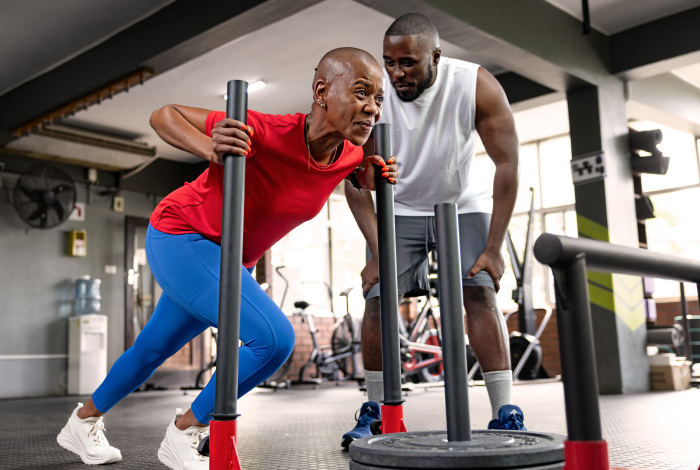
Strength or resistance training, as an intervention, can have a meaningful influence on the musculoskeletal system. Dr Viviers says that many people assume declining muscle strength and mobility are unavoidable parts of ageing, but that is not necessarily the case. "The earlier women incorporate strength training into their lives, the greater the potential benefit, but it is never too late to start. Even later in life, strength training can help support mobility, reduce frailty and improve overall quality of life."
It is no coincidence, then, that weight training is becoming increasingly popular among women as an effective way to maintain or improve strength, with women's participation in weight training increasing by 25% in 2024 alone.
Strength training doesn’t have to mean lifting heavy weights. "Simple exercises such as squats, lunges, step-ups, resistance band exercises, modified push-ups and carrying everyday objects can all help build and maintain strength,” advises Dr Viviers.
Weight-bearing activities, such as walking, climbing stairs and hiking, can also support bone health. The key is to choose activities that challenge the muscles safely and to increase resistance gradually over time.
The World Health Organization suggests a balance of aerobic activity and strength training, consisting of:
- at least 150 minutes of aerobic exercises a week, 75 minutes of vigorous-intensity physical activity or an equal combination of moderate and vigorous exercises
- an increase of moderate-intensity physical activity to 300 minutes per week for additional health benefits, such as weight loss
- strength training exercises for all major muscle groups at least twice a week
Every small step can lead to big gains, and consistency is key. Remember, strength training is not limited to the gym and participating in regular load-bearing activities, even an activity like gardening, can contribute to overall musculoskeletal health.
If you live with a chronic condition or have safety concerns, talking to your GP before starting your fitness journey may be beneficial.
Creatine for women: what it does and how it is used
Creatine monohydrate, once confined to high-performance sports, is increasingly showing up in gym bags, supplement stacks and casual conversations.
Supplementation conversations rarely come without a few myths attached, making it important to distinguish between the facts and fiction before use.
“Creatine, specifically creatine monohydrate, is a naturally occurring compound that helps muscles produce energy during exercise. It is found in foods such as red meat and fish and is also available as a dietary supplement – it is not a steroid as some people may think,” says Pretty Tshofela, registered dietitian at Life Mercantile Hospital.
Pretty adds that, as with any supplement, informed decisions and professional guidance are important.
“Creatine is by far the most researched supplement that offers wider benefits with regards to muscle strength and supporting protein synthesis. However, that is not the complete picture. As much as you increase muscle energy availability, you want to reduce muscle breakdown,” she says.
She advises that a combination of creatine and HMB supplements (essential animo acid that helps reduce muscle breakdown and preserving muscle mass) is far more beneficial. While supplementation may be appropriate for some women, it is important to get advice from a healthcare professional before you start taking creatine monohydrate, particularly if you have underlying health issues.
Dietitians assist in giving guidance with regards to specific protein requirements so that supplementation is done safely. “Most importantly, women must note that resistance training, adequate protein intake and a balanced diet remain the foundation of healthy ageing," says Pretty.
Creatine use during menopause
Beyond its established role in improving strength and physical performance, more research is emerging on creatine’s benefits for cognitive functioning and menopause-related fatigue.
There is a biological basis for this. “Oestrogen plays a role in regulating creatine levels in the brain and, as oestrogen levels decline during perimenopause, some women experience symptoms such as forgetfulness, difficulty concentrating and what is commonly referred to as ‘brain fog’,” says Dr Clayton Grieve, gynaecologist at Life St George’s Hospital.
Replenishing brain creatine stores through supplementation may therefore help to sustain mental energy and memory.
Separate research has also shown that creatine can help maintain cognitive performance during sleep disruption, which is particularly relevant for women experiencing menopause-related insomnia.
It is worth noting that the creatine dose matters. “Studies investigating memory and concentration generally used higher doses than those typically recommended for exercise performance,” says Dr Grieve.
While supplements, alongside a balanced diet and exercise, can meaningfully support changes in life stage, persistent symptoms should not automatically be attributed to ageing or menopause alone. A consultation with a healthcare professional, as well as regular health screening, can help identify underlying causes and ensure that any supplements or treatments are appropriate for your individual circumstances.
Frequently asked questions on women ageing well
Q: Can muscle loss in women be reversed?
A: Outcomes vary between individuals, but resistance training, adequate protein intake and treating underlying concerns can improve muscle strength and mass.
Q: How much strength training do women need per week?
A: Strength training should be done at least twice a week, covering all major muscle groups.
Q: How often should women get a bone density test?
A: Testing frequency depends on age, risk factors, medical history and menopausal status. A healthcare professional can advise when screening is appropriate.
Q: What is creatine monohydrate?
A: Creatine monohydrate is a naturally occurring compound that helps muscles produce energy during exercise. It is found in foods like red meat or fish and is available as a dietary supplement.
Q: Is creatine monohydrate safe for women?
A: Creatine monohydrate is considered safe for healthy adults when used as directed. Seek medical advice before use if you have an underlying health condition or concerns.
Q: Are all creatine supplements the same?
A: Manufacturing standards vary. Choose supplements from reputable manufacturers that clearly state creatine monohydrate as an ingredient and their quality assurance processes. Avoid products that don’t list all ingredients or include multiple stimulants or exaggerated claims.
Q: Can creatine help with menopause-induced brain fog?
A: Research is ongoing. Although early findings are promising, creatine should not be viewed as a treatment for menopausal symptoms.
Q: Who should I speak to before taking creatine monohydrate?
A: Consult a GP, dietitian or specialist for advice, particularly if you have an underlying condition, take chronic medication, are pregnant or breastfeeding or have concerns.
Take the next step in your health journey. Speak to your GP or a registered dietitian for personalised advice on strength training, nutrition and supplements. If you're concerned about muscle, joint, mobility or bone health, ask about a referral to an orthopaedic specialist or find one nearest to you.