

A surgery that can change more than a smile
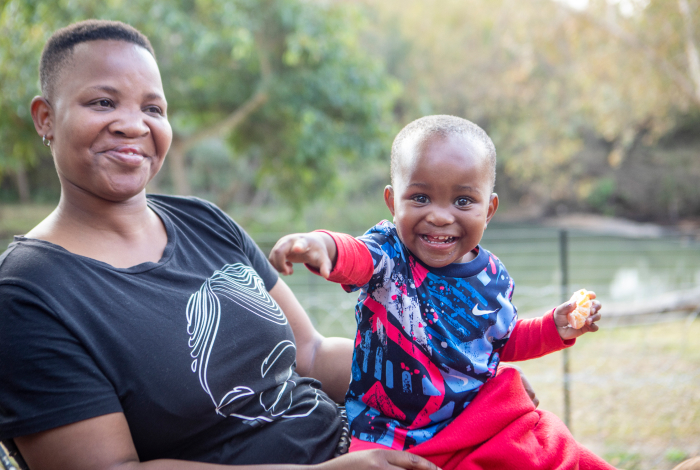
This month, Operation Smile South Africa – in partnership with Nelson Mandela Children’s Hospital, Life Healthcare and other organisations – will deliver a weekend surgical programme offering cleft lip and palate procedures for up to 40 children, while also building local surgical and clinical capacity through surgical skills training and collaboration.
“At Operation Smile, we believe safe surgery is a human right, not a privilege,” says Sarah Scarth, Executive Director of Operation Smile South Africa, which has, over the past 20 years, partnered with government and health institutions across the country to provide thousands of free surgeries to children and young adults with cleft conditions.
A cleft lip or palate occurs when parts of a baby’s lip or roof of the mouth do not fully fuse during pregnancy, leaving an opening or gap. Without intervention, it can affect a child’s ability to eat, speak and thrive, while also taking an emotional and psychological toll on the children and their families.
“At NMCH, our mission is inspired by Nelson Mandela’s deep love for children and his belief in their right to live and thrive,” says Dr Nkuli Boikhutso, CEO of Nelson Mandela Children’s Hospital. “This initiative reflects our commitment to family-centred, evidence-based care and the power of collaboration to change lives. By working together to deliver world-class surgeries and build local expertise, we are living our values of ubuntu, compassion and excellence.”
For families, those ideals are not abstract. They arrive in waiting rooms, in pre-surgery screenings and in the hours between hope and uncertainty.
“Powered by our volunteer medical team, the weekend surgical programme will help around 40 families access life-changing cleft surgery, while simultaneously supporting the transfer of critical skills towards building local cleft surgery capacity,” says Sarah Scarth.
A parent who knows the journey first-hand
Promise Mathebula understands both sides of cleft care: the life before surgery and the one after it. Growing up, she didn’t have language for what she was experiencing, only the awareness that she was seen as different. “I learned to accept that I am different from other children,” she says. But acceptance did not shield her from what followed. School became a place of fear. The bullying was so severe she considered leaving altogether.
At its worst, she describes a sense of isolation that is difficult to put into words, a feeling of being pushed to the margins of childhood itself. Surgery changed that. Afterwards, she says, something shifted. She could speak more freely, connect more easily, move through the world without the same weight pressing down on her. “I was able to relate to other children and make friends. My life changed.” That change stayed with her long after childhood ended. Years later, she became a mother and realised that her son, Mpelo, had been born with the same condition.
In that moment, she made a quiet decision about what kind of mother she would be. “I told myself I would do things differently,” she says. Mpelo underwent cleft lip surgery at five months old, followed later by palate repair. Promise still remembers the uncertainty before the operation, the fear of what she might see when he came out of theatre.
What she saw instead felt like release. “He came out completely different,” she says. “And my heart experienced peace and happiness that couldn’t be defined.” Now, she speaks about Mpelo in the language of ordinary childhood: laughter, play, appetite, school. The extraordinary part, for her, is how ordinary it is becoming.
The path towards a life-changing surgery
Lebone Tolomane, Rorisang’s mother, knew about her son’s cleft condition before he was born and began preparing herself as best she could. “Life was a bit difficult, but I had support from my family,” she says.
There were delays before the surgery took place, first because of an undiagnosed heart condition, then because he was underweight. Each setback extended a period already marked by uncertainty. “I felt sad and heartbroken,” she says. “I didn’t know what to do next. I started losing hope.” At one point, she says, she cried without knowing what would come next, only that the path forward felt unstable.
What carried her through was not certainty, but persistence – prayer, family and the slow accumulation of encouragement from those around her. When she finally heard that Rorisang was strong enough for surgery, the emotion came all at once.
“I was over the moon,” she shares. What she imagines for him now is a happy childhood. She speaks about speech, friendship and a life that does not require explanation. “He will have a happy life with friends,” she says. “Normal.” The word lands differently in context. It’s less about conformity, more about peace of mind.
“The Operation Smile South Africa team has been very supportive,” she says. For parents who have children who need cleft or palate surgery, Rorisang shares a message: everything will be okay, stay hopeful.
Care that goes beyond the operating theatre
For Dr Clare Neser, plastic and reconstructive surgeon at Life Vincent Pallotti Hospital in Cape Town, cleft care begins long before a child enters theatre and continues long after they leave it. Without timely intervention, children can face challenges with feeding, hearing, speech and dental development. But the effects are not only medical. Social isolation and stigma often arrive early, shaping how children see themselves before they are even old enough to understand why.
“Plastic surgery is only one part of cleft care,” she says. The rest belongs to a wider team of speech therapists, dentists, audiologists, paediatricians and psychologists. All of these roles contribute to a trajectory that continues long after the operation itself.
What stays with her most are not the procedures, but the moments immediately after them. “Seeing a parent look at their child after surgery for the first time; there is disbelief, gratitude and overwhelming emotion. It’s very difficult to describe.”
She has seen that moment repeat across 10 years of volunteer work with OSSA, with different families and children, and yet it never becomes routine. “It is incredibly humbling,” she says of families who travel long distances and return repeatedly for care.
“Children born with cleft conditions are capable of living healthy, confident and full lives when they have appropriate care. Timely surgery and ongoing support can change the entire trajectory of a child’s life. Something as treatable as a cleft should never define a child’s future. At the end of the day, all children have the right to smile,” she says.
Supporting the moments that change lives
For Galima Mobara, nurse at Life Kingsbury Hospital in Cape Town and an OSSA volunteer since 2008, the work is measured in presence. being there before surgery, after surgery and in the hours in between. She remembers one scene in particular: a grandmother waiting quietly through the screening process, holding her grandchild with a kind of steady endurance.
“These children are often abandoned by both parents and society,” she says. Her role, she explains, is not only clinical. It is emotional containment. “By showing care, love, reassurance and empathy not only to the patient, but to the entire family.”
Over time, she has seen what changes when surgery is successful. Children return to their families and are received differently; parents respond with relief that is often overwhelming, and something shifts in how a child is seen by the world around them.
“It has a major emotional impact,” she says. She has stayed in this work for years not because it becomes easier, but because it remains meaningful. “The gratitude of patients and families keeps me coming back.”
An honourary volunteer taking part this year is Avanthi Parboosing, Chief People Officer of Life Healthcare, who will join the programme on the ground in support of the surgical weekend.
“Every child deserves the chance to smile, speak and feel they belong – free from ridicule or judgement,” says Avanthi. “Meeting the mothers and children during screening, many carrying both anxiety and hope for life-changing surgery, is profoundly moving. It’s a powerful reminder of how much this moment means to families who have waited years. I’m immensely proud of Life Healthcare for supporting an initiative that makes such a real and tangible difference. It reflects the very heart of who we are and what we stand for: Making life better. This work is truly life-changing.”
To learn more about OSSA initiatives and apply for surgery candidacy, visit the OSSA website.