

The power behind care: What four nurses reveal about their careers
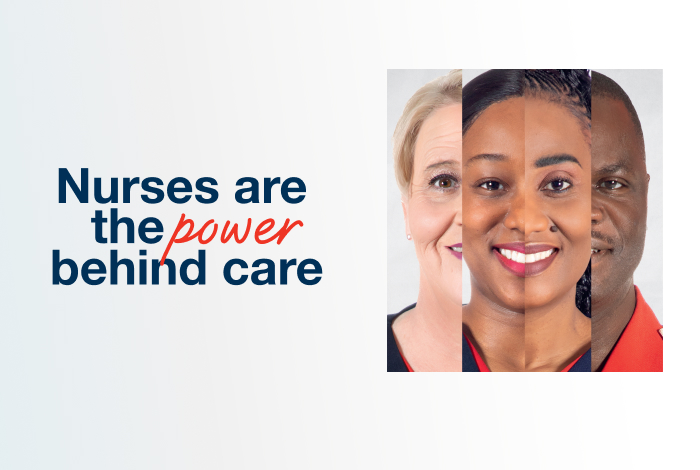
Nursing is often understood through its clinical lens: the protocols, procedures and outcomes that define patient care. But speak to those within the profession and a deeper narrative emerges — one shaped by endurance, attentiveness and presence.
At the core lies the power behind care, where clinical expertise meets empathy and where decisions, both seen and unseen, shape how patients experience their most vulnerable moments.
Across Life Healthcare hospitals in South Africa, nurses stand at the centre of this experience — coordinating multidisciplinary teams, translating complex medical information into clarity and advocating for patients at every stage of their journey. This International Nurses Day, four nurse leaders reflect on what it means to dedicate themselves to a profession that is as demanding as it is deeply human.
Jacques Smith, General Unit Nursing Manager at Life Peglerae Hospital
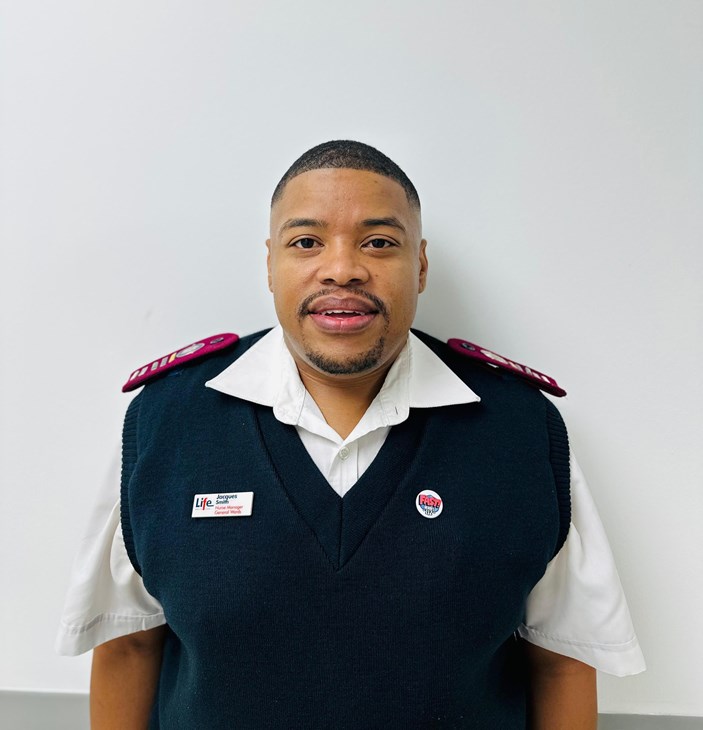
For Jacques Smith, nursing leadership is not defined by distance from the bedside, but by how closely you remain connected to it.
“Leadership in nursing is not about being removed from care,” Jacques says. “It is about ensuring care never loses its standard, even under pressure.”
Having worked across general nursing environments and management structures, he describes nursing as a profession that constantly demands recalibration. No two days are identical and no system remains static. What remains constant, however, is the need for presence: physically, emotionally and clinically.
In general units, where complexity often presents unpredictably, Jacques emphasises that the most critical skill is not speed, but awareness.
“You have to read the room, read the patient, read the team. Nursing is observational before it is procedural.”
He reflects on nursing leadership as a balance between operational responsibility and human judgement — where efficiency must never come at the cost of attentiveness.
“Patients don’t experience policy; they experience people,” Jacques affirms.
For him, International Nurses Day is a reminder that healthcare systems are only as strong as the people who carry them.
Calvin Netshiya, Unit Manager at Life New Kensington Clinic
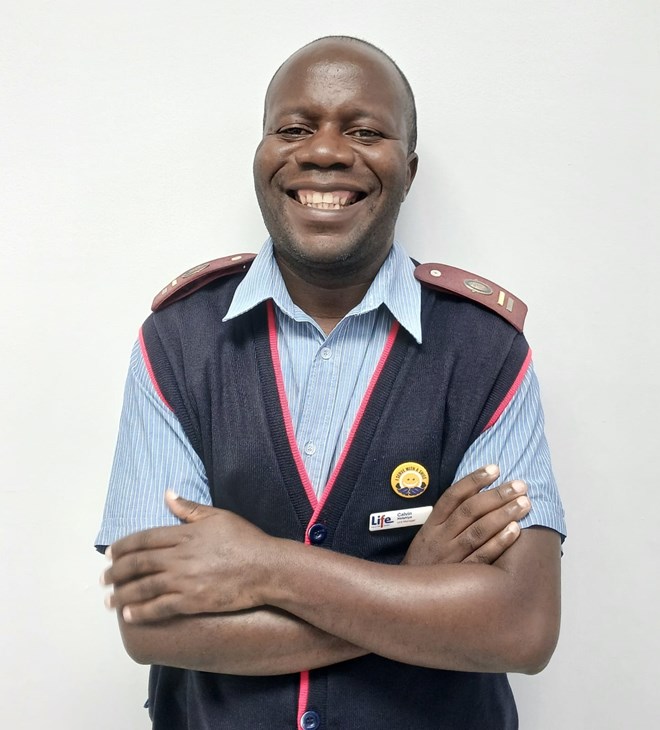
Calvin Netshiya’s approach to nursing is grounded in structure, yet shaped by adaptability. In a clinic environment where primary care needs intersect with resource constraints, his role requires both precision and flexibility.
“You can plan your day,” Calvin says, “but nursing will always interrupt you with reality.”
At the heart of his philosophy is accessibility. As clinics, he explains, are often the first point of contact in the healthcare system, the nurse becomes both clinician and interpreter — translating symptoms, concerns and urgency into clear care pathways.
Calvin views leadership in his acute rehabilitation unit not as a hierarchy, but as a shared responsibility.
“If the team is strong, the unit is strong. It cannot depend on one person.”
Communication, he believes, underpins everything — not only with patients, but within multidisciplinary teams.
“What you don’t communicate becomes the patient experience later,” he adds.
Despite the operational intensity of clinic management, Calvin returns to a single but defining principle:
“Nursing is not about big moments. It is about doing the small things correctly every single time.”
Maxine Macnamara, Unit Manager, Surgical ICU, Life Vincent Pallotti Hospital
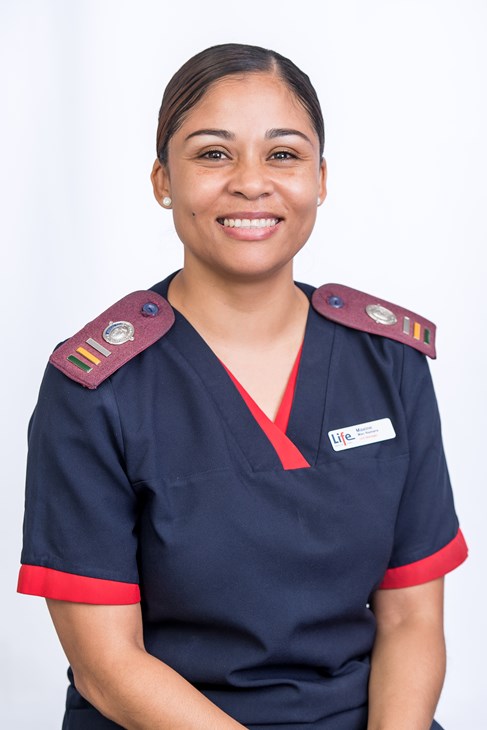
In Maxine Macnamara’s world, decisions are measured in seconds. As a surgical ICU unit manager, she operates in one of the most demanding environments in healthcare, where physiology, technology and emotion intersect continuously.
“My default state is caring,” Maxine says. “That is what brought me here and what keeps me here.”
With a career spanning government healthcare and more than a decade in critical care, she describes ICU nursing as requiring both clinical precision and emotional presence.
“You need to think critically, act quickly and still never lose compassion.”
But what defines Maxine’s leadership most strongly is a focus on fundamentals — hygiene, communication, dignity and presence.
“In ICU, it is easy to see machines and numbers. But you must never forget the person.”
She reflects on the role nurses play in moments of uncertainty, particularly for families navigating crisis and end-of-life decisions.
“That is where nursing becomes more than care. It becomes guidance.”
Advocacy, she adds, is central to the profession. Nurses act as a safeguard within multidisciplinary teams, speaking up when care does not align with standards or patient needs.
“We are the patient’s voice when they cannot speak for themselves.”
Even under high-pressure environments, she returns to one belief:
“You never do it alone. You just carry your part of it well.”
Charlotte Parker, Enrolled Nurse (Main Theatre) at Life Westville Hospital
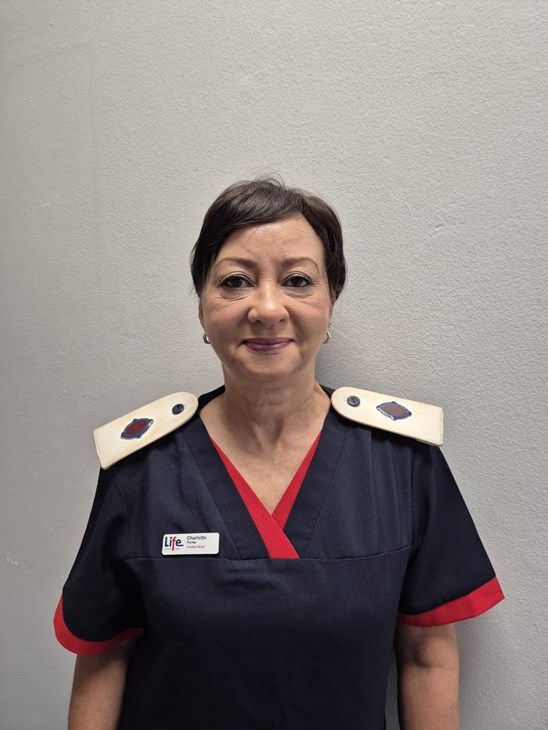
Charlotte Parker has spent four decades in theatre nursing — one of the most controlled yet high-pressured environments in healthcare.
“I like pressure,” Charlotte says. “When things are intense, I focus better.”
Her path into nursing was not linear. What began as both opportunity and necessity became a lifelong profession grounded in discipline and technical expertise.
Drawn early to theatre, she never left.
“In theatre, you become part of a system. Everything has to work together.”
While patient interaction is often brief, she finds meaning in precision, preparation and responsibility.
“You don’t always get to see the patient afterwards, but you know your contribution mattered.”
Over the years, Charlotte has witnessed significant shifts in training and practice, yet she believes the essence of nursing remains unchanged.
“It is still about attention. It is still about detail. That is what keeps patients safe.”
Known for bringing humour into high-pressure environments, she uses connection as a form of care.
“We talk. We joke. We keep it light. It helps patients feel human again,” she adds. “Patients feel it if you’re cold and clinical. They need warmth, even in that space.”
Her reflection on longevity in nursing is simple, but telling:
“I did my job the best I could.”
Across ICUs, theatres, wards and clinics, these four nurses reflect a profession grounded in both clinical excellence and human connection. Their settings may differ, but their experiences converge in one truth: nursing is sustained through attention, accountability and care that extends beyond procedure.
This International Nurses Day, their stories offer a powerful reminder that care is not only delivered by systems, but through people — those who continue to show up, every day, at the centre of care.
Learn more about Life Healthcare’s Nursing Care Programme on our website here.