

Nurse leadership in action: Three nurses share their journey to clinical excellence

Of all the healthcare professionals a patient encounters, nurses are most consistently at the centre of that journey. Positioned within clinical multidisciplinary teams, nurses translate clinical information into safe, co-ordinated and compassionate care, often serving as both clinical decision‑makers and patient advocates. In honour of International Nurses Day, three nurses reflect on what clinical excellence means in practice and how nursing leadership is shaped not only by skill, clinical judgement and continuous learning, but, most importantly by presence, perspective and purpose.
Clinical excellence in nursing is often measured in outcomes: recovery rates, protocols followed and systems maintained. But within the profession, excellence runs deeper It is reflected in sound clinical judgement, consistency under pressure and the ability to navigate uncertainty while remaining firmly grounded in patient-centred care.
Across Life Healthcare hospitals, nurses operate within environments that demand both precision and adaptability. Their leadership emerges not only in moments of critical care, but in real-time decisions made consistently and often unseen.
Through the experiences of three nurse leaders, a broader picture comes into focus: one where excellence is sustained through collaboration and a deep commitment to lifelong learning and care.
Mandla Shabalala, Nurse Manager at Life Cosmos Hospital
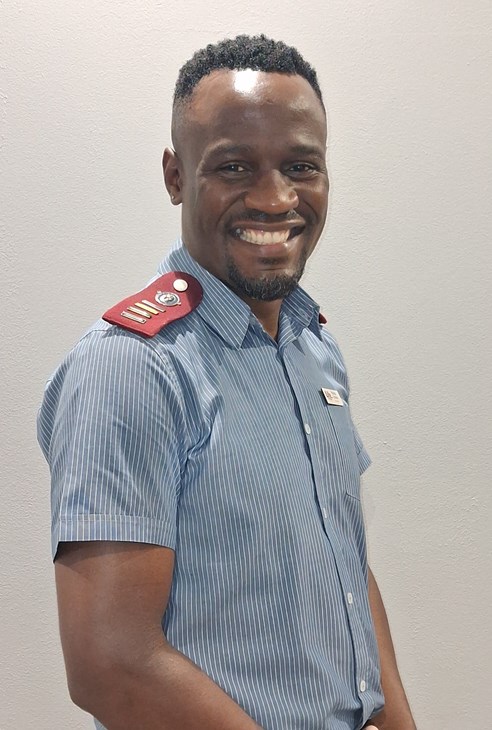
For Mandla Shabalala, nursing is defined by responsibility under pressure. His career, rooted in trauma and emergency care, has shaped a leadership style that prioritises decisiveness, accountability and unwavering patient advocacy.
He speaks about the profession with clarity and realism. “Nursing is lived in uncertainty,” he says. “You are constantly making ethical decisions in real time, in imperfect conditions, sometimes with limited information – and those decisions carry real consequences.”
Beginning his career in the public sector, Mandla was drawn early to trauma nursing, where rapid decision‑making and teamwork intersect. “In emergency care, every second matters,” he explains. “You learn quickly that hesitation can cost more than action.” These experiences built not only his clinical confidence, but his understanding of purpose.
One defining moment stands out: identifying a life-threatening cardiac event that had initially been overlooked. “You cannot rely solely on process; you have to apply judgement,” he reflects. “That is where nursing becomes critical.” The patient survived following urgent intervention, reinforcing his belief in the importance of vigilance and accountability.
Now in a leadership role, Mandla’s focus extends beyond individual performance to team dynamics and empowerment. “A strong team is one where people are empowered to speak,” he says. “Because silence in healthcare is where risk begins.” He is particularly aware of the challenges nurses face within hierarchical systems and emphasises the need for visible support from leadership.
At the core of his philosophy is advocacy. “The nurse is with the patient when no one else is,” he says. “That means you carry the responsibility to act as the patient’s voice when that patient is too weak, too ill, confused or afraid, even when it is difficult.”
Despite the demands of the role, his motivation remains grounded in impact rather than recognition. “I’m not here for accolades. You measure your work in outcomes,” he says. “In whether someone’s life is better because you were there.”
For Mandla, clinical excellence is not abstract. It is lived daily, in decisions made under pressure, in attention to detail and in the courage to act when it matters most.
Zwannda Netshankhu, Nursing Standards Manager at Life Beacon Bay Hospital

For Zwannda Netshankhu, leadership is defined by growth: not only personal progression, but the ability to continuously expand how care is understood and delivered. Her journey reflects a deliberate pursuit of opportunity, shaped by curiosity and a willingness to step into the unknown.
At 35, her career has already moved across multiple disciplines and geographies. A defining moment came early, when she relocated to Knysna to join Life Healthcare, entering an unfamiliar environment with no support system. “Growth doesn’t come from comfort,” she reflects. “You have to place yourself where you are required to stretch, even when you are uncertain.”
Starting in a surgical ward, she quickly recognised the value of visibility and initiative. “What stood out to me was how quickly potential is recognised at Life Healthcare when you are willing to show up fully,” she says. Within a year, she was named among the region’s Great 100 Nurses, a milestone that accelerated her leadership trajectory. By 27, she had stepped into a unit manager role, choosing to lead within the very environment where she had begun.
Her career continued to evolve as she explored renal dialysis, a field she describes as both technically demanding and intellectually stimulating. “Every new space teaches you something different about care,” she explains. “It forces you to think beyond what you already know.”
Now in her role as Nursing Standards Manager, Zwannda’s focus has shifted toward consistency and accountability. For her, clinical excellence is not a single achievement, but a sustained practice. “Standards are not documents; they are behaviours,” she says. “They live in what we do every day, especially when no one is watching.”
Her approach is deeply rooted in purpose, shaped by early experiences caring for her grandmother and the influence of her mother. Yet it is her mindset that defines her leadership most clearly: an ongoing commitment to learning, questioning and expanding what is possible within nursing. “You have to understand your ‘why’,” she says. “Because that is what carries you through the moments that test you.”
Natasha Packree, Nurse Manager at Life Roseacres Hospital
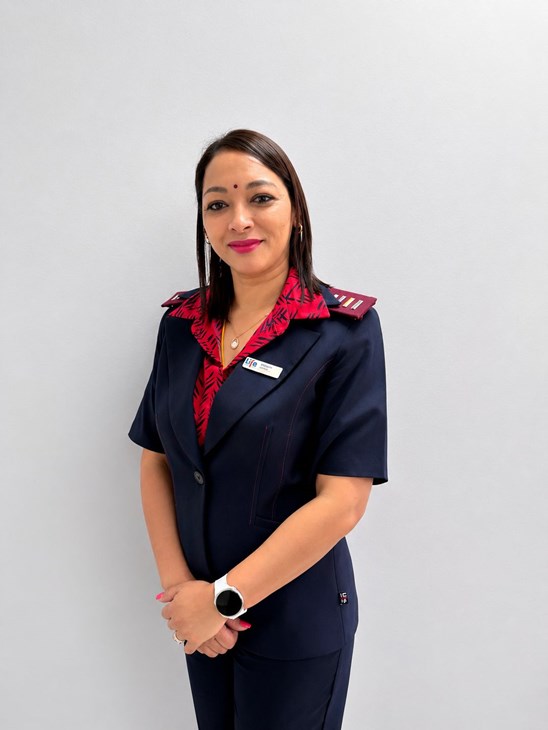
Natasha Packree’s leadership is grounded in subtlety: the ability to recognise that the most critical aspects of care often unfold in moments that are easy to overlook. For her, clinical excellence is not defined by urgency alone, but by attention.
Her connection to nursing began in a deeply personal way, shaped by time spent caring for her grandmother. What started as a search for understanding became a calling. “Nursing is not always loud or visible,” she says. “Often, it is about noticing what others might miss and acting on it before it becomes something bigger.”
That perspective has shaped how she leads today. As a Nurse Manager, Natasha places emphasis on the disciplines that underpin safe care: thorough handovers, careful observation and clear communication. “Excellence is built in the small moments,” she explains. “It is the consistency of doing the right thing, even when it feels routine.”
Her early experiences as a young nurse also influenced her leadership approach. She recalls the impact of mentors who created space for growth rather than judgement. “The best leaders are the ones who make it safe to learn,” she says. “Because confidence in nursing comes from being supported while you are still developing.”
For Natasha, advocacy remains central to the profession. She believes that nurses hold a unique position within the healthcare system, one that requires both clinical skill and the confidence to speak up. “A nurse is often the closest voice to the patient,” she says. “What you choose to say, or not say, can change the course of care.”
Her leadership is therefore not built on visibility, but on reliability: ensuring that every process, every interaction and every decision contributes to patient safety. “When nurses are empowered to do their jobs well, everything else becomes stronger,” she adds.
In her view, clinical excellence is not an isolated act. It is a collective standard, sustained through discipline, awareness and a shared commitment to care.
Across different disciplines and leadership roles, these three nurses offer distinct perspectives on what it means to pursue clinical excellence. Whether through professional growth, attentiveness or decisive action, their approaches differ, but their purpose remains aligned.
Their stories reflect the true power behind care, a profession that operates at the intersection of skill, decision making and humanity, where leadership is not defined by position alone, but by the ability to influence care in meaningful ways. On International Nurses Day, they serve as a reminder that excellence in nursing is not a destination, but a continuous practice shaped by those who choose to lead within it.
Learn more about Life Healthcare’s Nursing Care Programme on our website here.