

Occupational, speech and play therapy: What’s the difference?
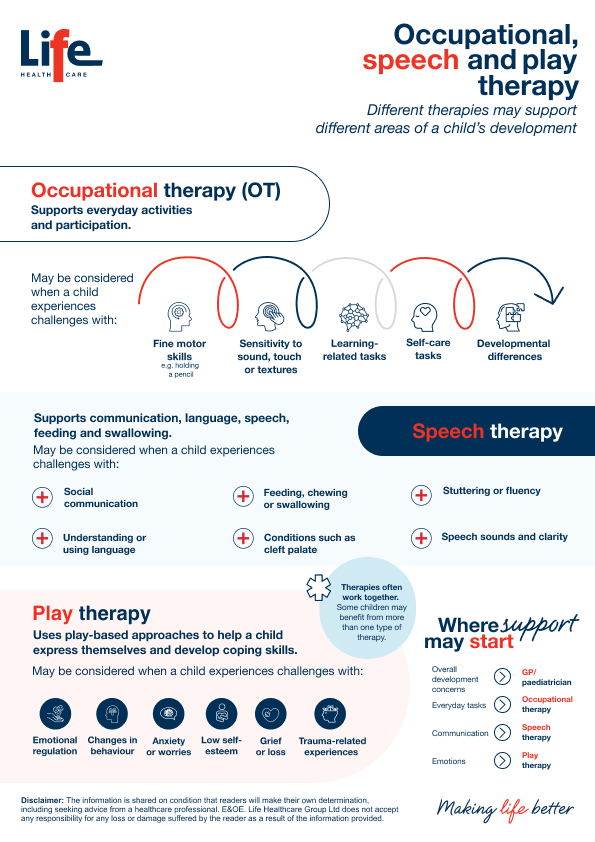
A conversation with a GP or paediatrician can be a helpful first step. In addition to considering whether a child may benefit from therapy or further assessment, they can assess the child's overall health and development, helping to identify any factors that may be contributing to the challenges being observed. They can also help bring together information from parents, teachers and other professionals to build a more complete picture of the child's needs.
Depending on the outcome of that assessment, support may involve an occupational therapist (OT), speech therapist, play therapist or another appropriately qualified professional.
Children do not always fit neatly into one category of support. Depending on their individual needs, support may involve one therapist or a team of professionals working together.
For many children, the most effective approach involves collaboration between parents, schools and healthcare professionals to ensure support is tailored to their unique needs and circumstances.
Every child develops differently; there is no single assessment or therapy that is right for every child.
They can assess your child’s overall health and development, help identify any factors that may be contributing to the challenges being observed, and guide the most appropriate next steps. This may include reassurance, monitoring, further assessment or referral to other healthcare professionals where appropriate.
By seeking advice early, parents can better understand their child’s strengths, challenges and the support that may be available.
Download our infographic for a simple overview of how occupational, speech-language and play therapy may support different areas of a child's development. And why speaking to your GP or paediatrician can be a helpful first step when concerns arise.
Visit our paediatric services webpage to learn more.